

Introduction
Running is one of the most accessible and transformative forms of exercise available. You don’t need a gym membership, complex equipment, or years of athletic training. All you truly need is a pair of reliable shoes and the resolve to take the first step.
Many beginners quit early, not because running isn’t for them, but because they start too intensely, leading to burnout or injury. This guide is your foundation for starting correctly, avoiding common pitfalls, and building a habit that lasts a lifetime.
Understanding the Impact of Running
Running is a high-impact, full-body cardiovascular exercise. It simultaneously strengthens your heart, lungs, core, and legs. Through consistent effort, your body undergoes a process of “aerobic adaptation,” becoming significantly more efficient at utilizing oxygen and burning energy. Remember: this transformation is gradual—respecting the process is the secret to long-term success.
Myth-Busting: Do You Need to Be Fit to Start?
You absolutely do not need to be fit to start; running is the tool you use to become fit. Initial discomfort, labored breathing, and tired legs are perfectly normal experiences, not indicators of failure. With consistency, your body will adapt, and routes that once felt impossible will soon become your warm-up.
Essential Gear: The Basics
- Running Shoes: Do not use casual sneakers. Visit a specialty store for a free gait analysis to find the right support (neutral, stability, or motion-control). Ensure a thumb’s width of space between your longest toe and the shoe tip.
- Moisture-Wicking Clothing: Avoid cotton, which causes chafing. Opt for polyester or nylon blends to pull sweat away from your skin.
- Helpful Add-ons: A tracking app (like Strava), a simple water bottle for longer runs, and wireless earbuds for motivation.
The Proven “Run-Walk” Method
To avoid injury, use the run-walk method to build endurance gradually.
| Week | Run | Walk | Repeat | Total Time |
|---|---|---|---|---|
| 1 | 1 min | 2 min | 7x | ~21 min |
| 2 | 2 min | 2 min | 6x | ~24 min |
| 3 | 3 min | 2 min | 5x | ~25 min |
| 4 | 5 min | 2 min | 4x | ~28 min |
| 5 | 8 min | 2 min | 3x | ~30 min |
| 6 | 10 min | 1 min | 3x | ~33 min |
| 7 | 15 min | 1 min | 2x | ~32 min |
| 8 | 30 min | — | 1x | ~30 min |
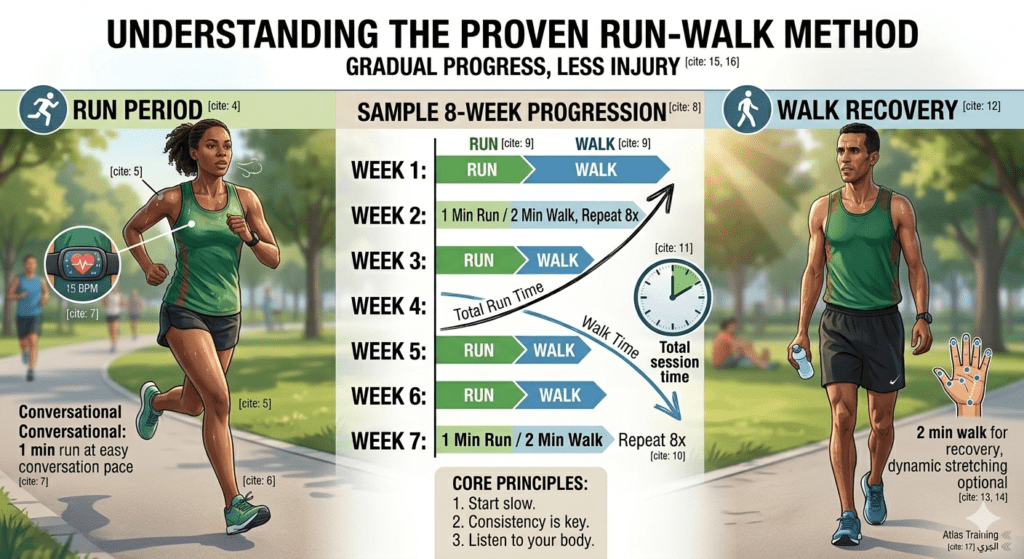
Keep your pace conversational; if you can’t speak, slow down.
Training Structure & Recovery
- Frequency: Aim for three sessions per week.
- Rest: Never run on consecutive days when starting. Use off-days for walking or light stretching to support recovery.
- Warm-Up/Cool-Down: Spend 5–10 minutes walking before and after your run. Save static stretching for after your run to maintain flexibility.
Common Mistakes to Avoid
- Over-pacing: Slow down to the point where running feels easy.
- Skipping Rest: Muscles repair and strengthen during rest days, not during the run.
- Ignoring Pain: Distinguish between “productive discomfort” and “sharp, persistent joint pain.” If in doubt, rest.
- Comparison: Focus strictly on your own progress; others’ journeys are irrelevant to your success.
Staying Motivated
- Goal Setting: Aim for a specific target, like “Run a 5K in 8 weeks”.
- Tracking: Use an app or journal to visualize your improvement.
- Community: Running with a partner creates accountability.
- Routine: Treat your runs like non-negotiable appointments in your calendar.
Conclusion
Running is a journey of patience and consistency. The athletes you see running effortlessly today all started where you are now. Trust the process, follow the plan, and stay committed.
Ready to level up? Continue your training with the next articles in our series:
- [The Complete Guide to Running Zones & Techniques]
- [Running Distances Explained — From 1K to Marathon]
Pingback: Running Heart Rate Zones: Complete Guide to Training Smarter