
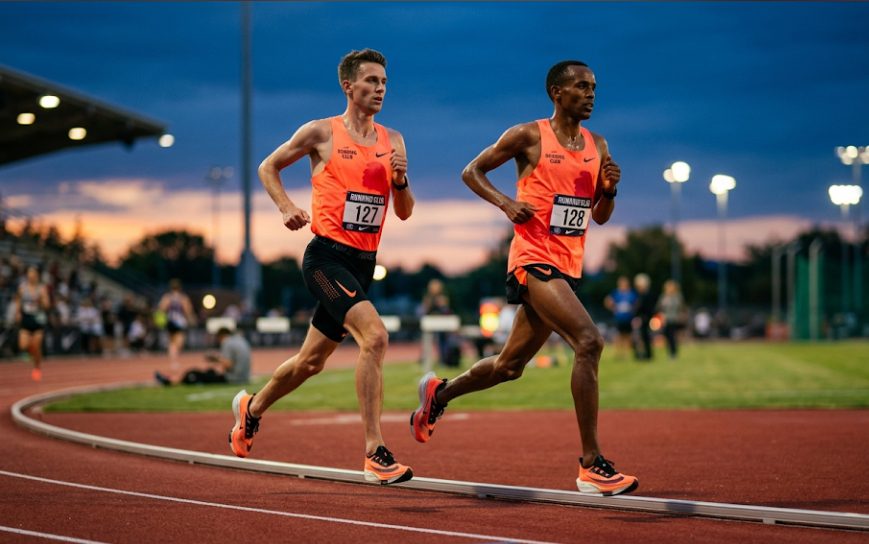
Proper Running Form and Technique: Breathing, Arms, Posture, and Foot Strike
Nobody teaches you how to run. You just do it — as a kid, on a playground, without thinking. And for a while, that works fine. But the moment you start training seriously, covering real distances, or pushing your pace, the way you run starts to matter a great deal.
Poor form does not always hurt immediately. It accumulates. A slightly hunched posture, tense shoulders, shallow breathing — these things feel minor in the first kilometer and significant by the tenth. They are the difference between a run that feels fluid and a run that feels like a fight against your own body.
The good news is that running form is a skill. It can be learned, corrected, and refined — and even small improvements can have a noticeable effect on how you feel, how fast you go, and how long you stay injury-free.
This guide covers the fundamentals: breathing, arm mechanics, posture, foot strike, and cadence. Not as abstract theory, but as practical tools you can apply on your very next run.
Why Running Form Matters More Than Most Runners Think
Here is a question worth sitting with: if two runners go out for the same 10K at the same pace, why does one finish feeling strong while the other is exhausted and sore?
Fitness plays a role, of course. But form plays an equally large one. Efficient running form means your body is doing the work it is supposed to do, in the right sequence, without wasting energy or loading joints and tissues incorrectly.
When form breaks down — and it does, especially when fatigue sets in — the body compensates. Those compensations are where overuse injuries are born. Shin splints, knee pain, IT band issues, plantar fasciitis — the majority of these are not bad luck. They are the result of repeated poor mechanics over hundreds of kilometers.
Improving your form does not mean running like an elite athlete. It means running more like the version of yourself that is relaxed, efficient, and in control.
Breathing: The Foundation of Every Good Run
Before anything else, you need to be able to breathe properly. Everything else in this guide will be harder if your breathing is off.
Breathing Through Your Mouth or Nose?
This debate comes up constantly among runners, and the answer is simpler than people make it sound. Breathe through both — your mouth and your nose at the same time. Your mouth is a much larger airway than your nostrils alone, and during exercise your body needs more oxygen than nasal breathing can deliver. Trying to breathe only through your nose while running at any real effort is like trying to drink through a coffee straw. It creates unnecessary oxygen debt and tension in your face and jaw.
Breathe in and out through your mouth. Let your nose contribute what it naturally does. Do not overthink it.
Belly Breathing vs Chest Breathing
This one actually matters. Most people breathe with their chest — shallow, rapid breaths that only fill the upper portion of the lungs. During a run, this creates a feeling of breathlessness even when the effort is not that high.
Belly breathing — also called diaphragmatic breathing — draws air deeper into the lungs, making each breath more efficient. To practice it: place one hand on your chest and one on your stomach. When you inhale, your stomach should rise first, and your chest second. That is a full breath.
It takes some practice to maintain this while running, but it becomes natural quickly. Runners who make this switch often describe it as suddenly being able to breathe properly for the first time.
Breathing Rhythm
Matching your breathing to your footsteps gives your breathing structure and prevents the side stitches that plague so many runners. A commonly recommended pattern is a 3:2 rhythm — inhale for three steps, exhale for two. This is a reliable starting point for easy and moderate efforts.
At higher intensities, a 2:1 rhythm — inhale for two steps, exhale for one — is more appropriate. As your fitness improves, your body will naturally find its own rhythm. Let it. The key is not to hold your breath or breathe in choppy, disconnected bursts.
Arm Mechanics: More Important Than You Think
Ask most beginner runners what their arms are doing, and they have no idea. Arms are often treated as passengers — passive appendages that swing along for the ride. In reality, they are active contributors to your pace, your balance, and your efficiency.
The Basic Arm Position
Your elbows should be bent at roughly 90 degrees. Your hands should be relaxed — not clenched into fists. A useful image: imagine you are holding a potato chip between your thumb and index finger. Loose enough that it would not crumble, but not so loose that it would fall.
Your arms should swing forward and back, not across your body. When your arms cross your midline, your torso rotates with them, wasting energy and destabilizing your stride. Think of your arm swing as a pendulum moving on a single track from front to back.
How Arms Affect Your Legs
This is the part most runners do not know: your arms and legs are connected through your core, and they naturally mirror each other during running. When your right foot strikes the ground, your left arm swings forward — and vice versa. This cross-body connection provides balance and forward propulsion.
What this means in practice is that if you want to increase your pace, pumping your arms faster will naturally speed up your legs. On steep hills or during the final stretch of a hard run, consciously driving your elbows back with more force is one of the most effective ways to maintain speed when your legs are tired.
Shoulder and Upper Body Tension
Tense shoulders are one of the most common form issues in recreational runners, and they come at a real cost. Tension in the shoulders travels up into the neck and jaw, creates a hunched posture that restricts breathing, and wastes energy that should be going into forward movement.
Every few minutes during a run, do a simple check: are your shoulders up near your ears? If so, drop them deliberately. Roll them back slightly, take a deep breath, and relax your hands. This takes two seconds and makes an immediate difference.
Posture: Running Tall Without Being Rigid
Good running posture is not about being stiff and upright. It is about being aligned — tall, relaxed, and balanced.
Head and Eye Position
Your head is heavy — roughly 5 to 6 kilograms — and where it goes, your body follows. Looking down at your feet pulls your head forward, which rounds your upper back, collapses your chest, and restricts your breathing. It also puts excessive stress on your neck and upper back over time.
Look ahead. Your eyes should be directed toward the ground roughly 10 to 15 meters in front of you, not straight up at the horizon. Your chin should be roughly parallel to the ground. This naturally positions your head over your spine and opens your chest.
Torso and Spine
A slight forward lean is natural and beneficial in running. The key word is slight — no more than 5 to 10 degrees from vertical. This lean should come from your ankles, not your waist. If you find yourself bending forward at the hips, you are folding, not leaning, and this compresses your hip flexors and restricts your stride.
Think of your torso as a plank — not rigid, but solid. Your core muscles should be lightly engaged throughout your run. Not braced as if you are about to take a punch, just gently active, providing a stable base for your arms and legs to work from.
Hip Position
Your hips should be neutral — not tucked under, not pushed too far forward. When hips drop to one side with each stride, a movement called lateral pelvic tilt, it places significant stress on the IT band, glutes, and lower back. This is often a sign of weak glutes or hip abductors, and it is worth addressing with strength training if you notice it.
Foot Strike: What Matters and What Doesn’t
Foot strike — where your foot makes contact with the ground — has generated enormous debate in the running community over the past two decades. Heel striking was declared the enemy. Barefoot running was heralded as the solution. The reality, as the research has since clarified, is more nuanced.

The Three Types of Foot Strike
Heel strike: The back of the foot lands first, in front of the body’s center of mass. This is the most common pattern among recreational runners, particularly those wearing heavily cushioned shoes.
Midfoot strike: The middle of the foot lands roughly under the body’s center of mass. This distributes impact more evenly and is often associated with more efficient running.
Forefoot strike: The ball of the foot lands first. Common in sprinters and some distance runners, particularly those who have transitioned to minimalist footwear.
What the Research Actually Says
No single foot strike pattern is universally superior for all runners. What matters far more is where your foot lands relative to your body. Overstriding — landing with your foot well ahead of your center of mass, regardless of whether you heel or midfoot strike — is the real problem. It acts as a braking force, slowing you down with every step and increasing impact through your joints.
If you land with your foot roughly under your hip, you are in a good position regardless of whether it is your heel or midfoot that touches down first.
Cadence: The Underused Lever
Cadence is the number of steps you take per minute. The oft-cited target of 180 steps per minute is a rough guideline, not a universal law, but increasing your cadence does tend to naturally improve foot strike and reduce overstriding.
If you currently run at 160 steps per minute and you increase it to 170, you will naturally take shorter, quicker steps — which brings your foot closer to underneath your body and reduces the braking effect of overstriding.
Use a metronome app or a running watch with a cadence display to measure and gradually increase yours. A jump of 5 to 10 percent over several weeks is sufficient — large changes too quickly create their own problems.
Putting It All Together: A Form Checklist for Your Next Run
It is impossible to think about all of this simultaneously while running. Instead, do a quick mental scan every 5 to 10 minutes, checking one element at a time:
1. Breathing — Am I breathing deeply from my belly? Is my rhythm steady?
2. Hands — Are my hands relaxed, or have I clenched them into fists?
3. Shoulders — Are they relaxed and away from my ears?
4. Elbows — Bent at roughly 90 degrees, swinging forward and back?
5. Head — Am I looking ahead, not down at my feet?
6. Posture — Am I tall and slightly forward, or hunched and bent at the waist?
7. Hips — Are they level, or dropping to one side?
8. Steps — Am I landing under my hips, or reaching forward with each step?
That is eight checkpoints. Cycle through them over the course of a 30-minute run, and by the time you reach the end, you will have addressed each one several times.
Should You Change Your Form All at Once?
No. This is worth being direct about. Changing too much at once — overhauling your foot strike, your arm swing, and your posture in the same week — is a fast route to new injuries. Your body has adapted to the mechanics you have been using, for better or worse, and significant changes in form shift the load onto tissues that are not yet prepared to handle it.
Pick one element. Work on it consciously for two to three weeks. Let your body adapt. Then address the next one. Small, incremental changes applied consistently produce real improvements without the injury setbacks that come from trying to fix everything at once.
Frequently Asked Questions
Does running form really prevent injuries?
Yes — consistently poor form is one of the leading contributors to overuse running injuries. Improving mechanics does not guarantee a zero-injury running career, but it significantly reduces the frequency and severity of problems over time.
How do I know if I am overstriding?
A simple way to check: film yourself running from the side using a phone propped on a bench or held by a friend. If your foot is clearly landing well ahead of your knee and hip with each stride, you are likely overstriding. Many running stores and physiotherapy clinics also offer free or low-cost gait analysis.
My calves are extremely sore after trying to change my foot strike. Is that normal?
Yes, very. Shifting away from heel striking loads the calves and Achilles tendon in a way they are not used to. Start gradually, increase your mileage slowly when changing form, and allow adequate recovery time.
Can I improve my form without a coach?
Absolutely. The principles in this guide are sufficient for most runners to make meaningful improvements on their own. Video feedback — filming yourself and reviewing the footage — is one of the most effective self-coaching tools available and costs nothing.
Conclusion
Running form is not something you sort out once and then forget. It is something you return to regularly — checking in, making small adjustments, and responding to how your body is moving on any given day. Fatigue changes your form. Tired legs can reintroduce the very habits you have worked to correct.
The goal is not perfection. It is awareness. A runner who can recognize when their posture collapses or their shoulders tighten up — and correct it mid-run — will go farther, feel better, and stay healthier than a runner who never thinks about these things at all.
Start with your breathing on your next run. Then your arms. Take it one piece at a time. The form that feels natural three months from now will look very different from where you are today.
This article is part of a complete running series.
⬅ Previous: [Running Heart Rate Zones — A Complete Guide to Training Smarter]
➡ Next: [Running Distances Explained — From Your First 1K to Marathon]
Pingback: Running Distances Explained: From 1K to Marathon