
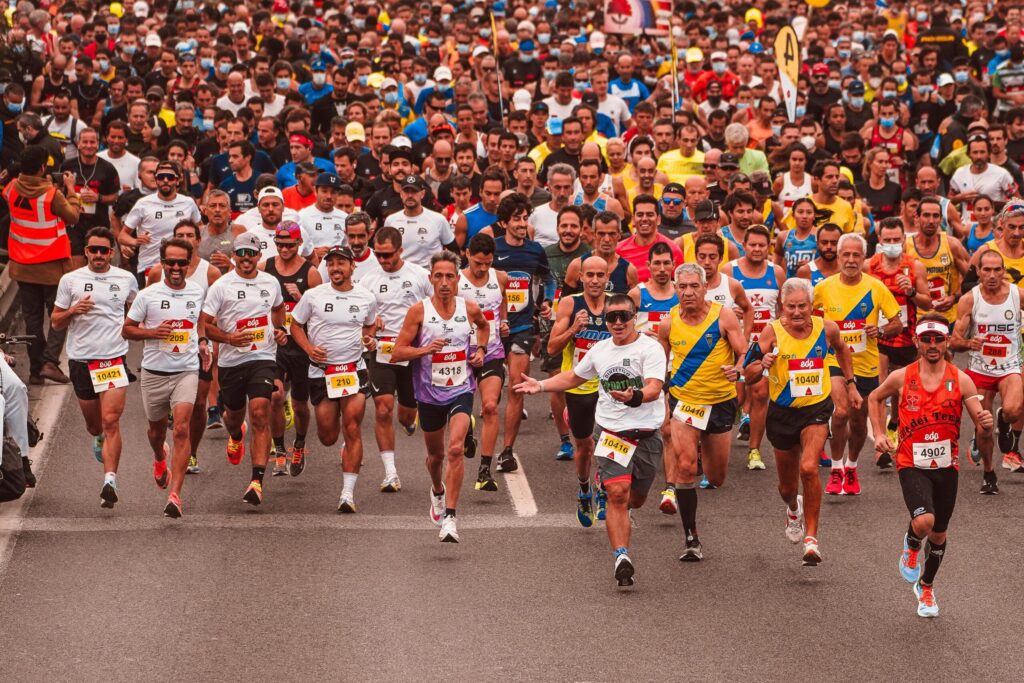
Every runner remembers their first real distance milestone. For some it was running a full kilometer without stopping. For others it was a 5K that felt like a half marathon. For a rare few, it was the moment they crossed a finish line after 42.2 kilometers and thought — somehow, impossibly — that they wanted to do it again.
Distance is what gives running its structure. Without it, you are just moving. With it, you have a target, a direction, and a way to measure exactly how far you have come.
This guide covers all the key running distances for beginners to marathon level — from that very first kilometer to the full 42.2K — with an honest, practical look at what each distance demands, who it is right for, and what it actually takes to get there. No sugarcoating. No impossible promises. Just the real picture, so you can choose your distance wisely and train for it intelligently.
The 1 Kilometer Run — Smaller Than You Think, Bigger Than It Feels
Let us start at the beginning.
One kilometer. For a non-runner, this sounds almost trivially short. It is not. The first time you run a continuous kilometer without stopping, without walking, without clutching your knees and wondering if you are dying — that is a genuine achievement. Do not let anyone tell you otherwise.
At an easy beginner pace of 7 to 8 minutes per kilometer, you are running for roughly 7 to 8 minutes straight. For a body that has never done this before, that is a meaningful physiological event. Your heart rate spikes, your breathing feels labored, your calves complain. All of this is your body adapting, not failing.
What the 1K teaches you: Pacing. Almost every beginner who runs their first kilometer goes out too fast. The first 300 meters feel fine, the next 400 meters feel hard, and the last 300 meters feel like a personal emergency. If that sounds familiar, you are in good company. Learning to control your effort in the opening minutes of a run — resisting the urge to go all-out at the start — is one of the most transferable skills in all of running.
- Your milestone goal: Run 1K continuously at a pace where you can breathe steadily throughout. Once you can do that, you are ready to extend.
The 5 Kilometer Run — The Most Democratic Race on Earth
The 5K is where most runners find their footing — and for good reason. It is long enough to be a genuine challenge, short enough to be accessible to almost anyone, and forgiving enough to allow for significant improvement over time.
Globally, the 5K is the most popular race distance. The Parkrun movement has made it a weekly ritual for hundreds of thousands of runners worldwide. It is the distance where beginners stop being beginners and start being runners.

How long does it take to run a 5K?
That depends entirely on where you are starting from. Here is an honest range:
- Complete beginner: 35 to 45 minutes, including walk breaks
- Beginner running continuously: 28 to 35 minutes
- Recreational runner: 22 to 28 minutes
- Solid club runner: 18 to 22 minutes
- Competitive runner: Under 18 minutes
None of these are better or worse. They are just different points on the same journey. The only time that matters is yours — and how it compares to your own previous best.
Training and Mental Resilience for the 5K
What the 5K demands: Consistency. To run a comfortable 5K, you need four to six weeks of regular running — three sessions per week, gradually increasing your distance. The run-walk method covered in the first article in this series is the most reliable path from zero to 5K. Eight weeks of that program will get most people to the finish line of their first 5K.
The mental side of the 5K: Around the 3.5K mark, something interesting happens to almost every runner. The initial adrenaline has worn off, the finish line is not yet in sight, and the body sends a signal that says: this would be a good time to stop. This is not your body failing. It is a test. Runners who learn to recognize this moment — and run through it rather than surrendering to it — develop a mental resilience that carries into every other distance.
The 10 Kilometer Run — Where Running Gets Serious
The 10K is the sweet spot for a huge number of runners. It is challenging enough to require structured training, short enough to fit into almost anyone’s schedule, and long enough to produce a genuine sense of accomplishment at the finish.
Many runners spend years at the 10K distance, consistently improving their time, before deciding to move to longer races. This is not settling. This is smart. The 10K rewards aerobic development, pacing strategy, and consistent training more than almost any other distance.
What the 10K demands: A real aerobic base. You cannot bluff your way through a 10K the way you might squeak through a 5K on guts alone. At this distance, your cardiovascular fitness, your running economy, and your ability to maintain pace under fatigue all come into play.
To run a solid 10K, you need eight to twelve weeks of structured training — including regular easy runs in Zone 2, one weekly tempo run, and a long run that builds up to around 10 to 12 kilometers. Your body needs to be comfortable covering the race distance in training before race day.
Honest advice for 10K training: Do not neglect your easy days in pursuit of more hard sessions. The temptation, once you are taking your running seriously, is to make every run a workout. This is the fastest way to accumulate fatigue, stagnate in your progress, and eventually get injured. Two easy runs for every one hard session is the baseline ratio that keeps you healthy and improving.
- A realistic 10K target for a beginner runner after 12 weeks of training: 55 to 65 minutes. Run it, finish it, and be proud of it. From there, you have a personal best to chase.
The Half Marathon — 21.1 Kilometers — The Distance That Earns Respect
Twenty-one kilometers. Half of a marathon in name, but a completely different beast in practice. The half marathon is where running stops being a casual pursuit and becomes a lifestyle. Completing one requires months of consistent training, and it will test not just your fitness but your patience, your scheduling discipline, and your ability to stay healthy over an extended preparation period.
It is also one of the most rewarding things you will ever do.
What the half marathon demands: Time. Not just training time — though you will need 12 to 16 weeks of preparation — but the ability to be consistent over that entire period. Missing one week of a 5K program is recoverable. Missing two weeks of half marathon training while you are deep in preparation is a problem that requires adjusting your race expectations.
Your long run is the cornerstone of half marathon training. Each week, one run should be longer than the others — building gradually from around 10K at the start of your program to 18 to 19K in the final weeks before the race. This progressive overload is what prepares your body to cover the full distance on race day.
Overcoming the Kilometer 16 Barrier & Nutrition
The wall that isn’t: In marathon running, hitting “the wall” is a well-known phenomenon around kilometer 32 to 35. In the half marathon, many first-timers experience something similar around kilometer 16 to 18 — a point where the legs feel heavy, the finish feels far, and maintaining pace becomes a genuine act of will.
This moment is not a physical collapse. It is a negotiation between your body and your mind, and your mind can win it. Slow slightly if you need to. Take a small amount of energy gel or sports drink if you are using them. Focus on the next kilometer, not the total distance remaining. The finish line will come.
What to eat and drink during a half marathon: For most runners, water at every aid station is sufficient. For runs over 90 minutes — which many first-time half marathon finishers will exceed — a small amount of fast-digesting carbohydrates, either from sports gels, chews, or a banana, taken around the 60 to 75 minute mark can make a noticeable difference in how you feel in the final kilometers.
The Full Marathon — 42.2 Kilometers — A Race Like No Other
There is a reason people spend years working toward their first marathon. There is also a reason the same people, having finished one, start planning the next one before the soreness has even faded. The marathon is the ultimate test of what distance running can produce in a human body, and it demands respect at every stage.
The marathon is not a longer half marathon. It is a fundamentally different event. The physiological demands — particularly the depletion of glycogen stores and the cumulative muscular damage from 35,000 or more foot strikes — are qualitatively different from anything in shorter races. This is why marathon preparation takes 16 to 20 weeks for most runners, and why the training plan must be followed carefully rather than treated as a rough guideline.
The 30-Kilometer Barrier and Pacing
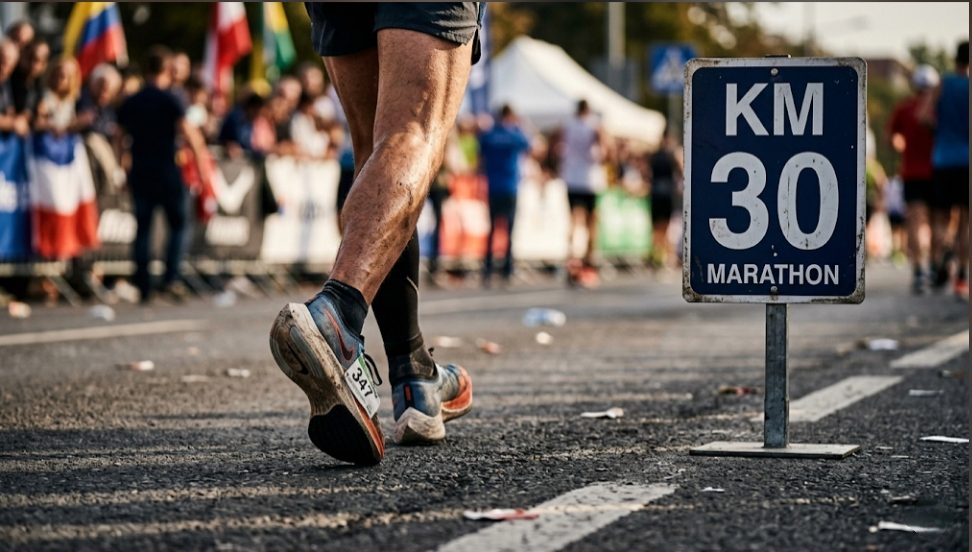
Ask any marathon runner about kilometer 30 to 35, and they will give you a look that contains a full story. This is where the glycogen stored in your muscles begins to run critically low, where the accumulated fatigue of every kilometer before it arrives all at once, and where the gap between a runner who trained properly and one who did not becomes brutally apparent.
Hitting this point is not failure. It is a predictable part of the marathon for the vast majority of runners. What separates those who push through from those who walk the final 10 kilometers is not talent. It is preparation, pacing, and nutrition.
The golden rule of marathon pacing: Go slower in the first half than you think you need to. Almost every first-time marathon runner goes out too fast. The first 21 kilometers feel controlled and manageable, and that feeling is deceptive. The pace that costs you nothing at kilometer 10 will cost you everything at kilometer 35 if it was 15 seconds per kilometer too quick.
A conservative first half preserves the glycogen and muscle integrity you will desperately need later. Running negative splits — finishing faster than you started — is the mark of a well-run marathon and the result of discipline applied in the first half.
What it takes to finish a marathon:
- 16 to 20 weeks of structured training
- A peak long run of 32 to 35 kilometers in training
- Weekly mileage that reaches 50 to 60 kilometers for recreational runners at peak training
- A clear race-day nutrition and hydration plan
- The ability to hold your goal pace for far longer than feels comfortable
Realistic Marathon Finish Times:
- First-time finisher: 4:00 to 5:30
- Experienced recreational runner: 3:30 to 4:00
- Competitive age-grouper: Under 3:30
Finish your first one. Time is irrelevant. Crossing that line after 42.2 kilometers of voluntary human effort is something that cannot be adequately described — only experienced.
Ultra Marathon — Beyond 42.2 Kilometers — For Those Who Need More
Ultra marathons begin where the standard marathon ends — and they can extend to 50K, 100K, 100 miles, or multi-day events that cover hundreds of kilometers through mountain terrain. They are not relevant to most runners reading this guide, but they deserve a mention because they represent something important: there is always more road ahead.
Many ultra runners are not superhuman athletes. They are ordinary people who fell in love with distance running, built their fitness methodically over years, and eventually found that the marathon was not quite long enough to satisfy what running had given them. Their stories are a reminder of where consistent, patient, intelligent training can take you over a long enough timeline.
How to Choose from These Running Distances for Beginners
This is the question that matters most, and it has a straightforward answer: choose the distance that challenges you without overwhelming you.
- If you are brand new to running, the 5K is your starting point. Full stop. Everything else builds from there.
- If you can run a comfortable 5K and want a new challenge, the 10K is the logical next step — not the half marathon. The gap between 5K and 10K fitness is smaller than the gap between 10K and half marathon fitness. Respect the progression.
- If you have been running 10Ks consistently for several months and you are ready for something more, the half marathon is waiting. Give it the 12 to 16 weeks of preparation it deserves.
- The marathon should be approached only when the half marathon feels genuinely comfortable — not as a one-time accomplishment, but as a distance you have run multiple times and understand.
There is no prize for rushing this progression. There is, however, a significant cost: overuse injuries, burnout, and the bitter experience of undertrained runners discovering on race day that their body was not ready for what they asked of it.
Build slow. Race smart. Enjoy every distance for what it is — because each one has something the others do not.
Frequently Asked Questions
How long does it take to go from couch to 5K?
For most people, eight weeks of consistent run-walk training — three sessions per week — is enough to complete a 5K continuously. Individual results vary based on starting fitness, age, and consistency.
Can I run a half marathon without running a 10K first?
Technically yes, but it is not recommended. Running a 10K first gives you a realistic picture of your fitness, helps you understand your pacing, and builds the aerobic base that half marathon training requires.
Is the marathon really as hard as people say?
Yes. But hard in a way that is entirely manageable with the right preparation. Hundreds of thousands of recreational runners finish marathons every year. The distance does not require exceptional talent — it requires exceptional consistency.
How many days per week should I train for each distance?
- 5K: 3 days per week
- 10K: 3 to 4 days per week
- Half Marathon: 4 days per week
- Marathon: 4 to 5 days per week
What is the biggest mistake runners make when training for longer distances?
Increasing weekly mileage too quickly. The ten percent rule — never increasing your total weekly distance by more than ten percent from one week to the next — is one of the most reliable injury-prevention guidelines in running. Follow it, especially in the early weeks of a new training block.
Conclusion
Every runner starts the same way — one kilometer at a time. The distances that seem impossible from where you are standing today will look completely different once you have put in the weeks of work that transform potential into fitness.
Choose your next target wisely. Train for it patiently. Respect what each distance requires, and give yourself the time and consistency to arrive at the start line ready.
The road is long. That is exactly what makes it worth running.
This article is part of a complete running series.
- ⬅ Previous: Read our guide on [proper running form and technique].
- ➡ Next: Check out our analysis on [morning vs night running].
Pingback: Proper Running Form and Technique